
Company
From thermal engineering research to real AI-supported operations.
Beijing Nuanliu Technology Co., Ltd.
Founded in September 2015 and based in Beijing, Nuanliu works inside real energy operations rather than around them. Hydraulic, thermal and equipment behaviour are the starting point: industry knowledge, live data, algorithm models and actual control are combined in one system instead of living in separate tools.
Academician Ni Weidou serves as Chief Scientist. The core team comes from Tsinghua University and Stanford University, bringing together energy-system and artificial-intelligence backgrounds.
Years of project work have produced a technology stack developed in-house — AIoT, digital twins, online dynamic hydraulic simulation and AI agents. Decision and execution capability is carried by the Nuanliu Energy AI Agent Platform; the stack is applied to district heating, integrated energy and other complex energy systems. Every capability has to answer an engineering question on site, not only in a demonstration.
- 2025–2026 heating season: a complete season of full-time, full-condition AI autonomous operation at the Zhengzhou Airport Zone EMC project
- AIoT, digital twins and online dynamic hydraulic simulation developed in-house
- Intelligent hardware series held under independent intellectual property
- Projects in 14+ provinces and municipalities, including group-level cross-regional customers
- More than 400 million m² under AI-managed control
- Customers: provincial and city heating utilities, group heating enterprises, industrial parks and manufacturers
Why customers keep us inside the operating loop
Four things that matter more than a product brochure: who founded the work, where the engineering comes from, whether it has run in the field, and whether the numbers can be checked.
Founded in 2015
Nuanliu focuses on AI for Energy — Redefining How Energy Systems Operate with AI.
Research-informed engineering
Thermal, hydraulic and operational expertise are embedded in our simulation and dispatch products.
Field-proven products
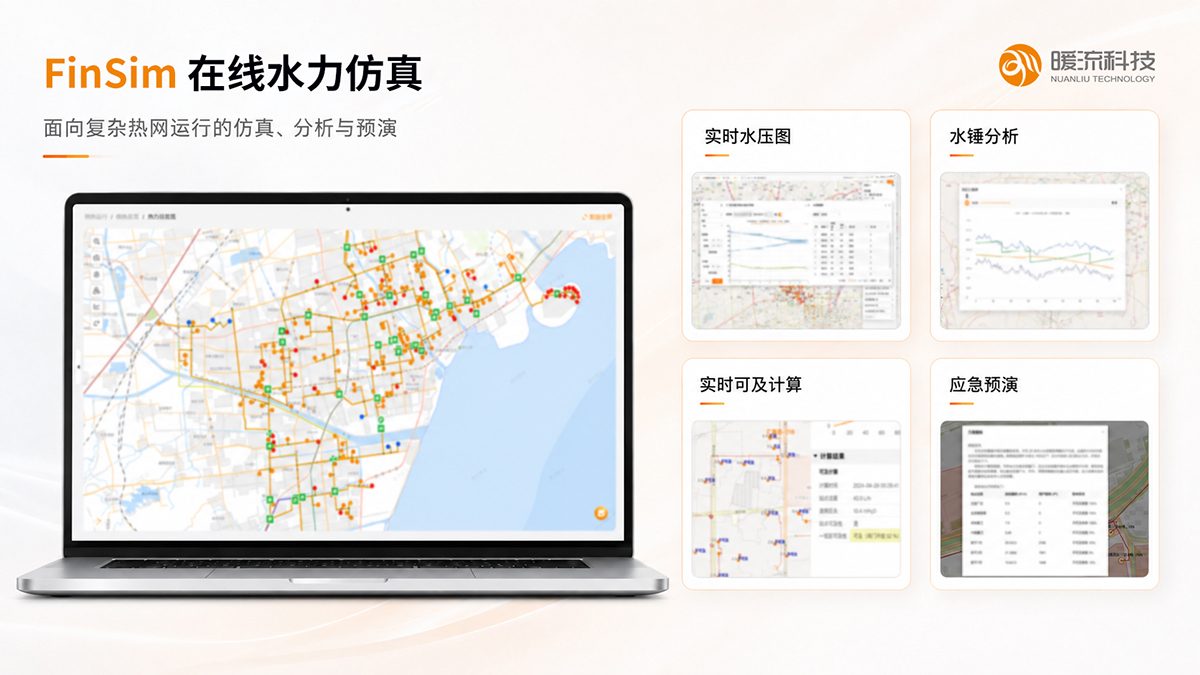
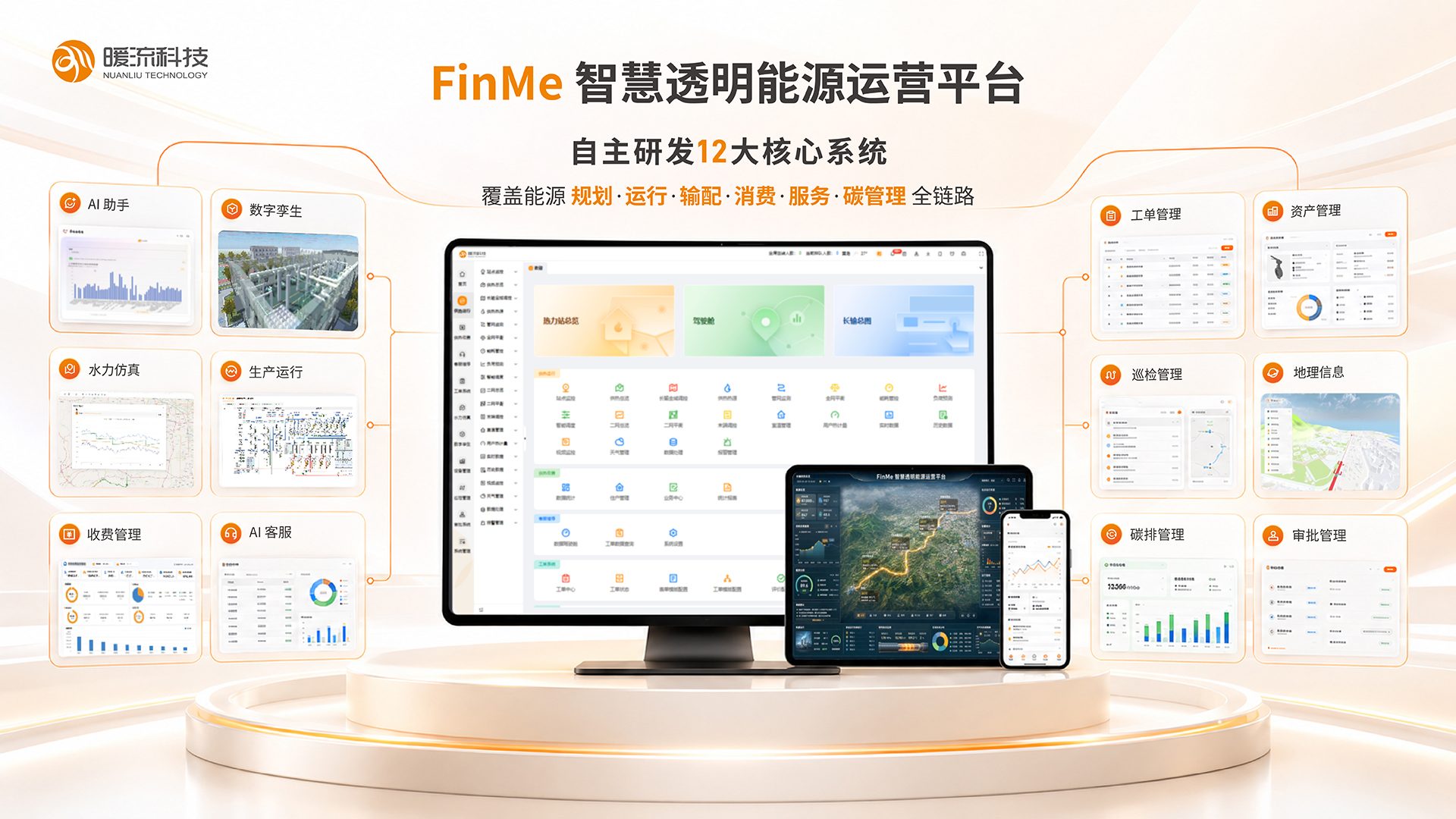
From sensors and edge controls to FinMe, FinSim and FinGo, our technology is built for operational constraints.
Evidence over buzzwords
Project-specific outcomes are reported against their own operating conditions and measurement periods.
A decade of operating problems, in order
From heating-network control to four energy domains, each step answered a constraint met in the field.
Beijing Nuanliu Technology is founded, starting from heating-network control problems.
In-house intelligent hardware enters site application, solving power supply and cabling at scattered points; the FinGo production operations system is deployed.
The online dynamic hydraulic simulation engine is engineered to solve whole-network conditions online, refreshing as operating conditions change; EMC projects demonstrate the value of AI-based control; FinFee and FinCall are released.
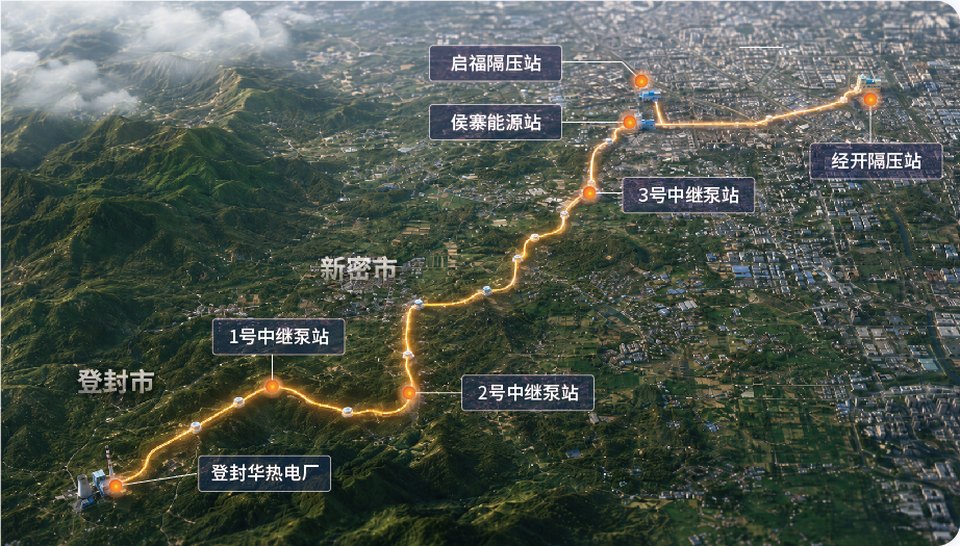
Coverage extends across the main heating provinces in northern China, forming full source–network–station–demand capability; long-distance networks with large elevation differences are taken on.
Heating safety support for the Winter Olympics, zero-carbon buildings and city-level clean-energy projects; the AI agent decision loop enters operation, unattended substation groups scale up, and eight service offices are established.
Four energy domains progress in parallel: long-distance and high-elevation heating deepens, while low-carbon parks, data centres and advanced manufacturing form delivered projects.
Value written where it can be checked
Technology returns to the customer's site, and value returns to a result someone can verify.
Create value that can be seen
Every technology and every project has to land on savings, emissions, cost and safety the customer can measure — otherwise it stays a demonstration.
Stand on the shoulders of giants, and finish what looks impossible
Respect and build on what others have already established, then take on targets that look out of reach.
Start with a real operating challenge.
Share the network, operating constraints and control objectives. We will discuss technical fit and the required evidence.