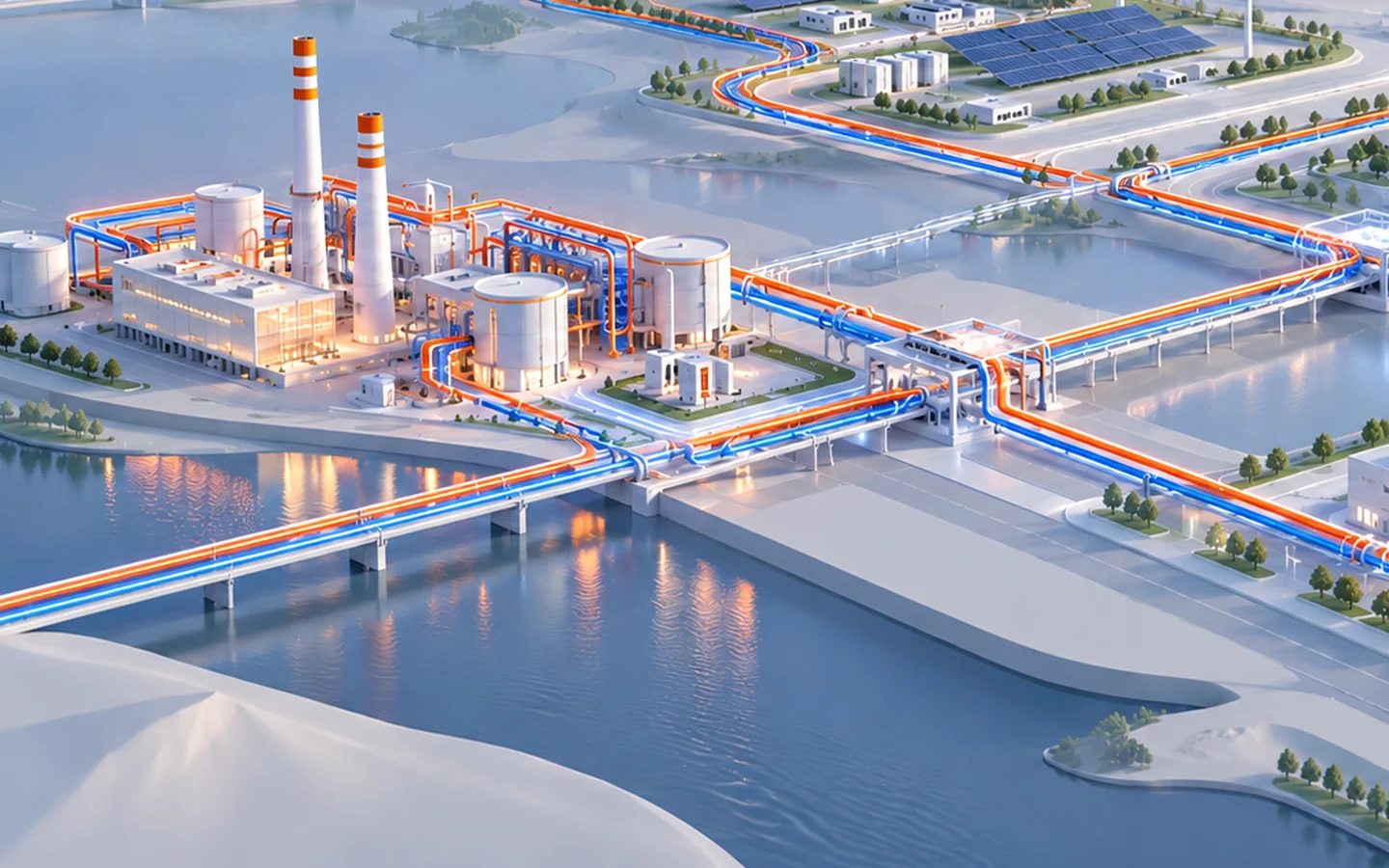
Products & Platform
FinMe integrates operations; FinSim solves hydraulics; FinTwin builds models.
Model. Simulate. Decide. Execute.
FinMe unifies operations while specialized modules preserve clear engineering responsibilities.
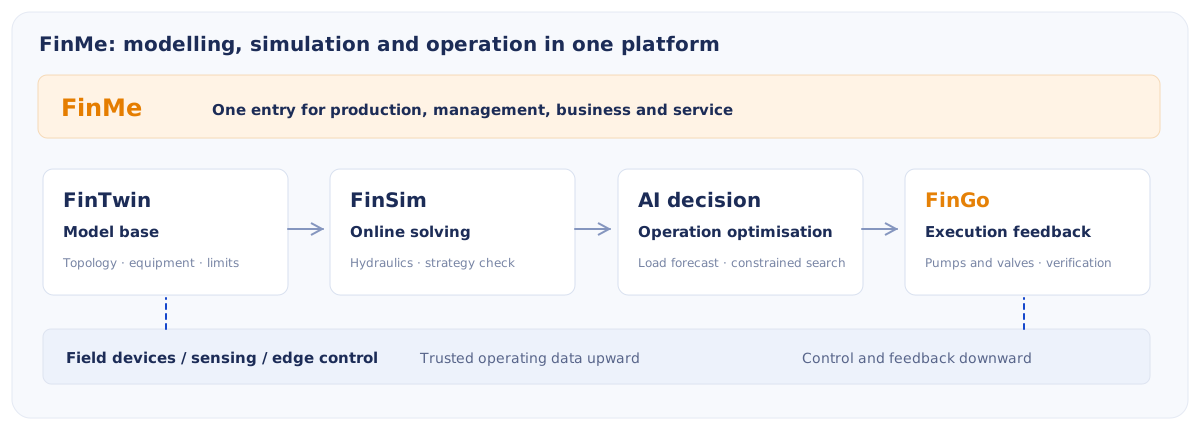
Split by engineering responsibility, not by module count
One platform, but not one undifferentiated module: modelling, solving, deciding and executing stay separable, so each link can be checked on its own. The deciding layer is carried by the Nuanliu Energy AI Agent Platform.
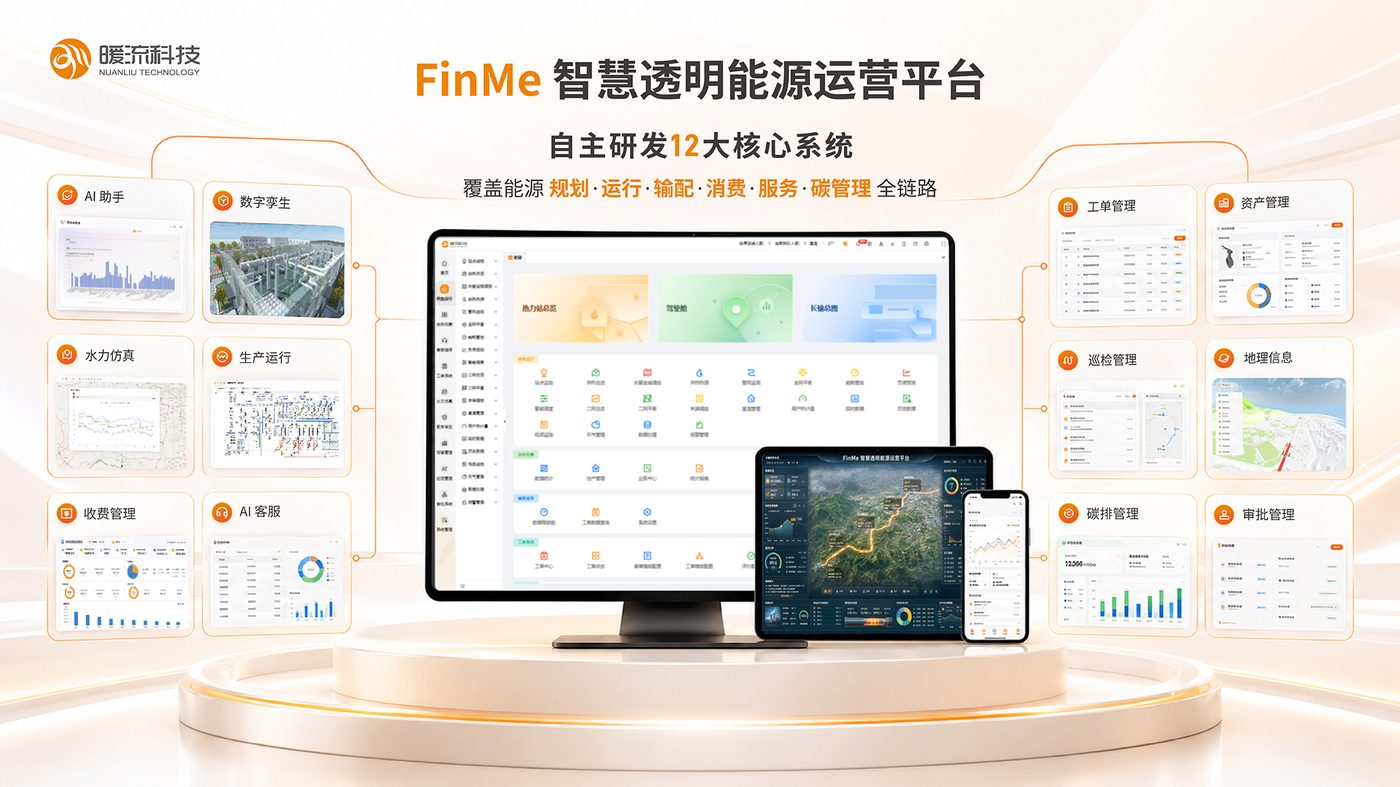
FinMe · Energy Operations Platform
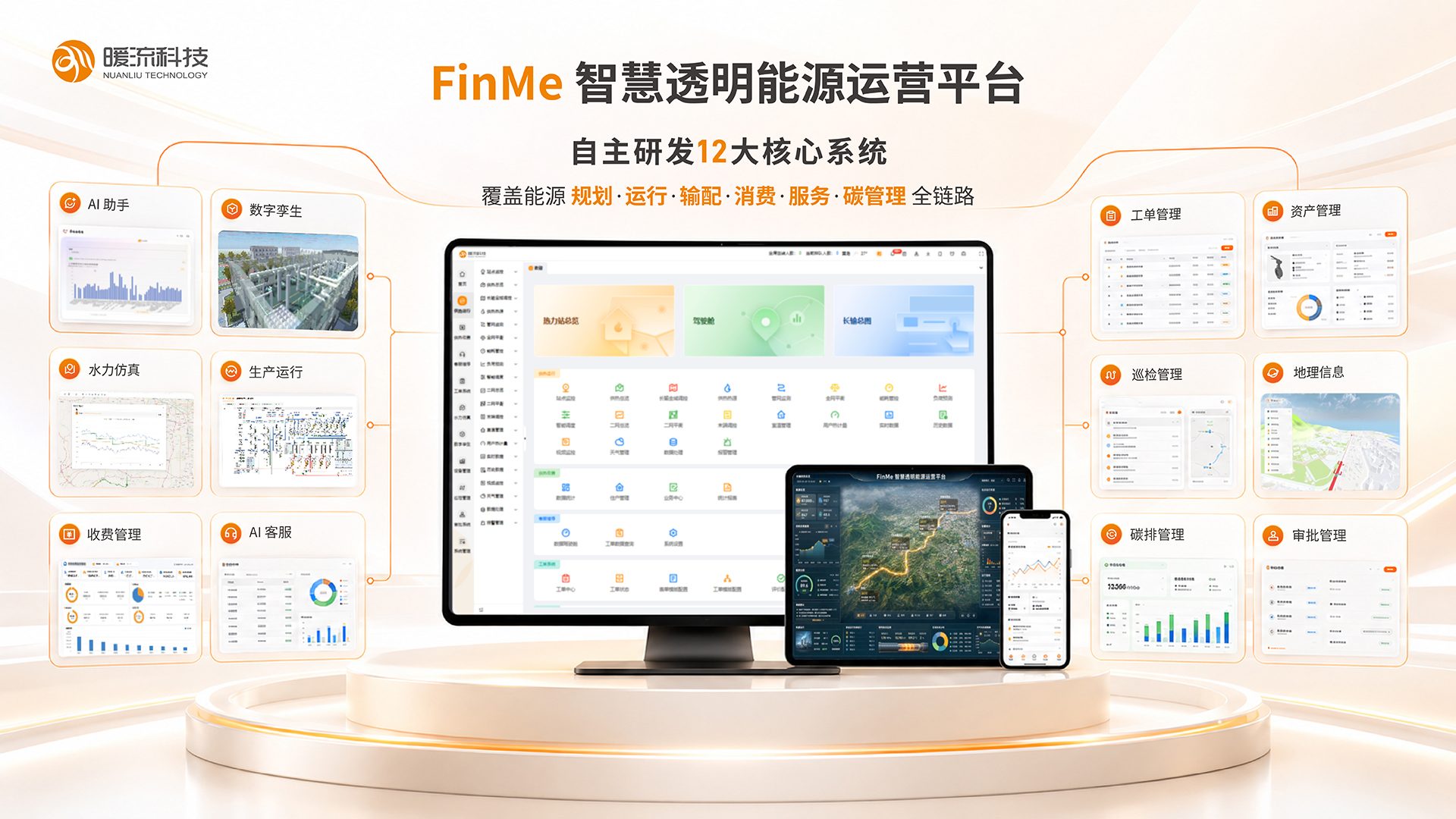
A modular, industrial energy-management platform integrating 12 core systems across production, operations, customer service and management.
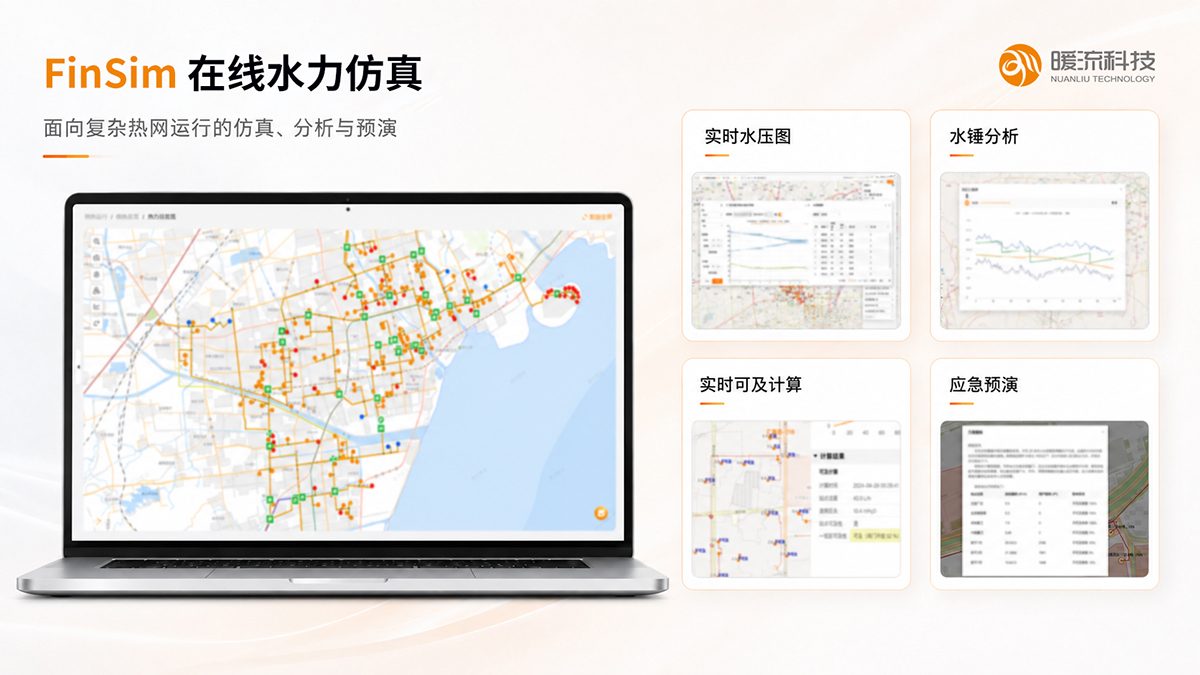
FinSim · Online Hydraulic Simulation
Real-time hydraulic solving and operating-condition validation for heating-network dispatch. Modelling effort falls by 70%, and condition reproduction accuracy stays above 90%.
FinTwin · Digital Twin
BIM/GIS-based spatial digital models, equipment recognition and calibration for simulation-ready network representations.
FinGo · Production Operations
Supports long-distance transmission, multi-source dispatch, substation optimization and secondary-network AI group control.
FinCall · AI Service
Uses intent recognition and controlled knowledge retrieval for customer inquiries, repairs, work orders and follow-up.
FinFee · Billing
Billing, account management, collection channels and reconciled financial workflows for heating enterprises.
Twelve core systems inside FinMe
FinMe is the operating platform. These are the systems it carries, from field equipment through to management workflows.
AI Assistant
Answers operating questions from project knowledge and live data.
Digital Twin
Holds topology, equipment and spatial models for the whole network.
Hydraulic Simulation
Solves pressure, flow and temperature for the current condition.
Production Operations
Runs dispatch, setpoints and secondary-network group control.
Billing
Handles metering, tariffs, accounts and collection channels.
Customer Service
Receives calls, classifies intent and dispatches repairs.
Work Orders
Tracks the full lifecycle of each repair and maintenance task.
Asset Management
Keeps equipment ledgers, life cycle and replacement planning.
Inspection
Plans routes, records findings and closes defects.
Geographic Information
Places network assets and faults on one map.
Carbon Management
Collects energy and emission data into an auditable ledger.
Approval Workflow
Routes operational and management approvals with a record.
Hardware is what makes the loop close
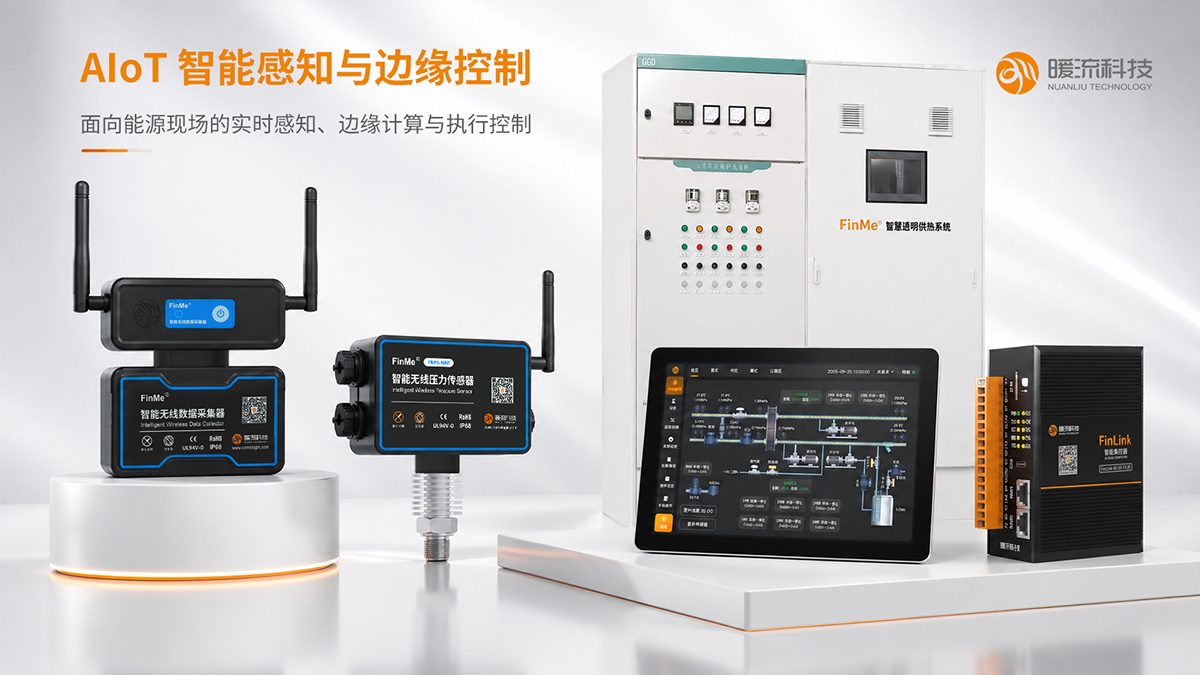
Software cannot turn a valve. These devices carry commands and measurements between the platform and the network.
FinLink · Intelligent controller
Edge acquisition, protocol conversion and local control for substations and plants. It keeps collecting through a communications outage and applies the last validated strategy locally.
FinValve · Intelligent valve
Holds a target opening at the device itself, so secondary-network group control does not depend on a single central command path staying up.
Wireless sensing
Temperature, pressure and flow measurement where cabling is impractical, with battery life matched to a heating season rather than to a laboratory test.
Hardware matters because the closed loop ends at a physical device. A strategy that cannot reach a valve, or whose result is never measured, stops being control and becomes a recommendation.
Start with a real operating challenge.
Share the network, operating constraints and control objectives. We will discuss technical fit and the required evidence.