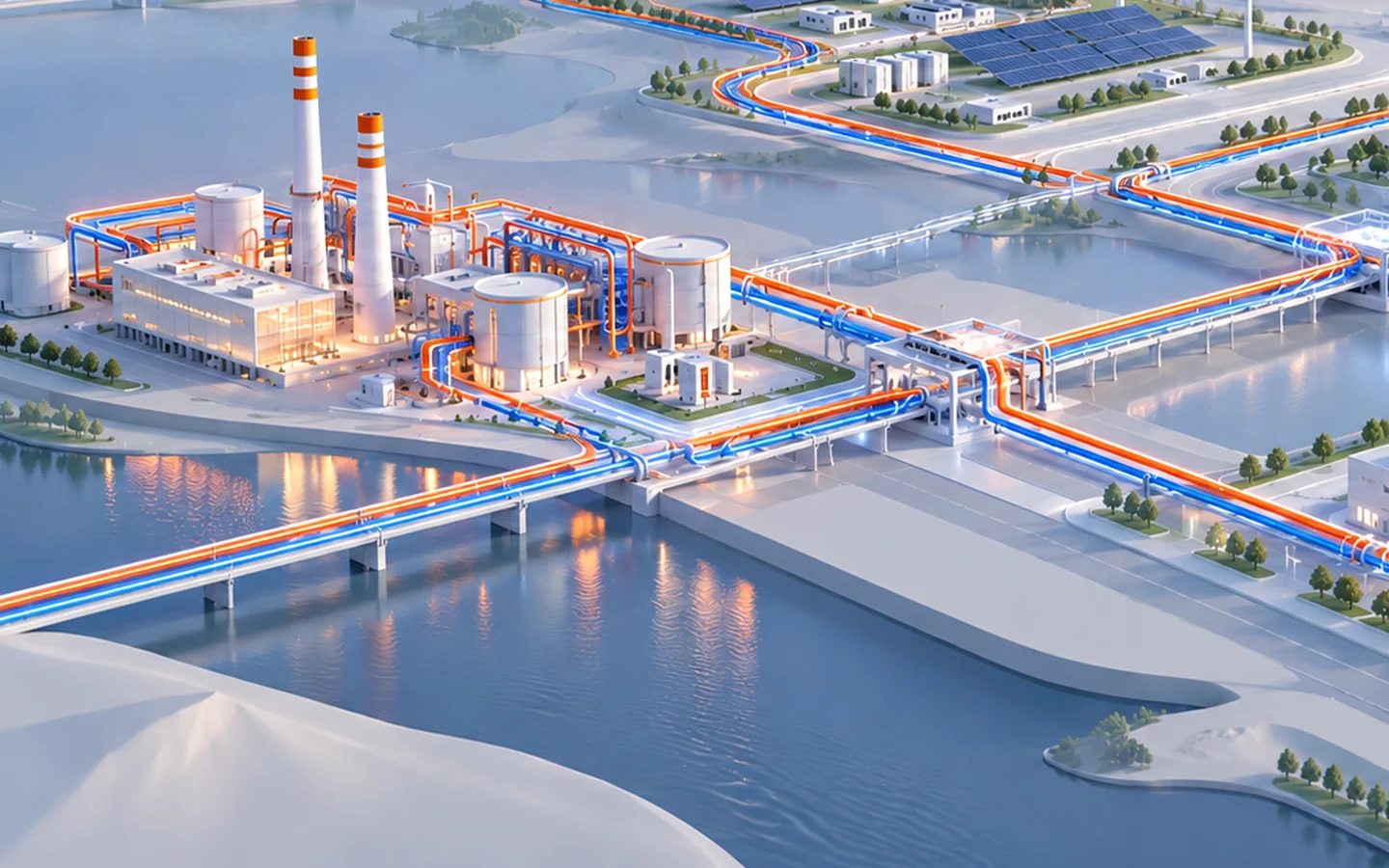
Technology
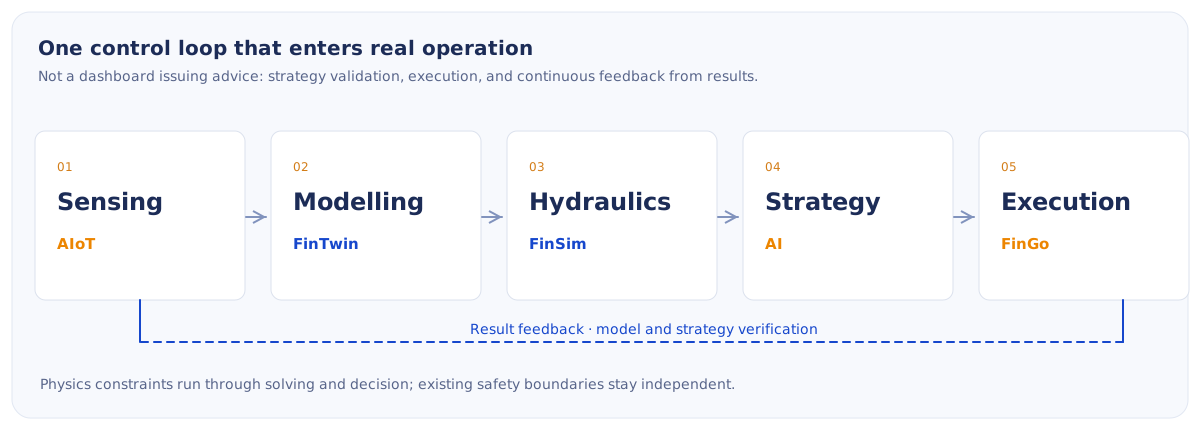
Models, physical boundaries and execution form one closed loop.
Engineering feedback is the key
Each decision is tested against real physical conditions, then validated after execution.
Four capabilities, one operating chain
AIoT connects the field, digital twins make it computable, hydraulic simulation keeps it solvable, and AI agents carry decisions into operation inside physical limits.
Data foundation
Continuous sensing and validation protect data quality.
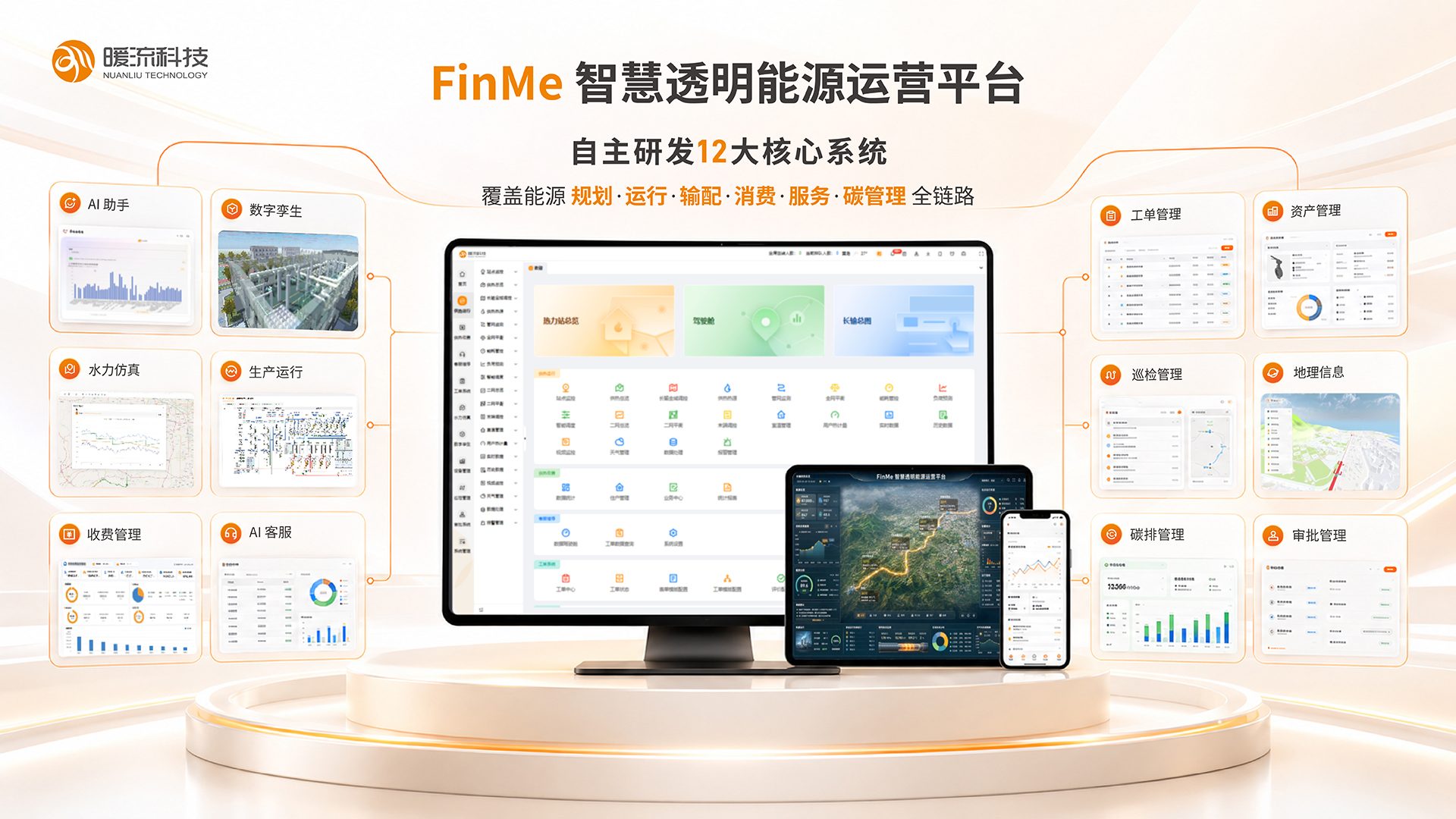
Physics and digital twins
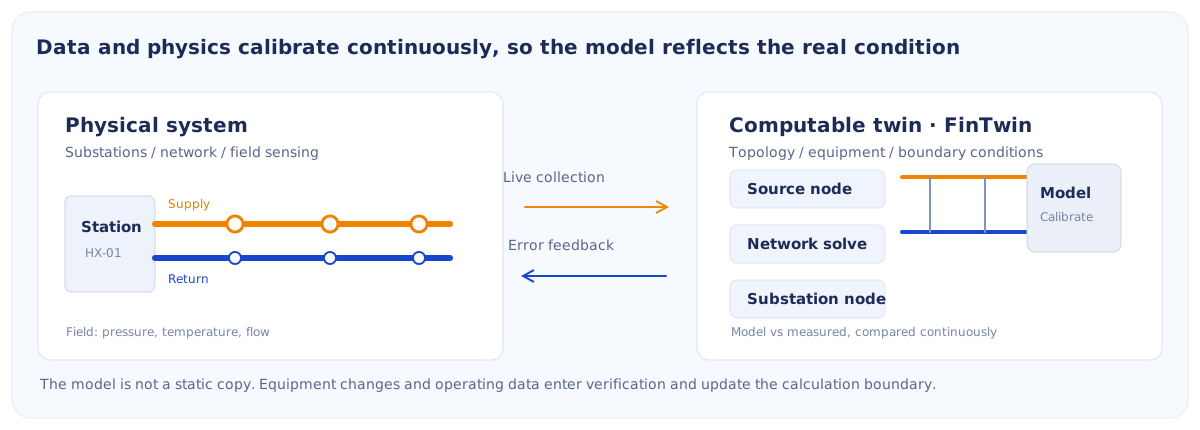
FinTwin provides the calibrated spatial model; physics define operating boundaries.
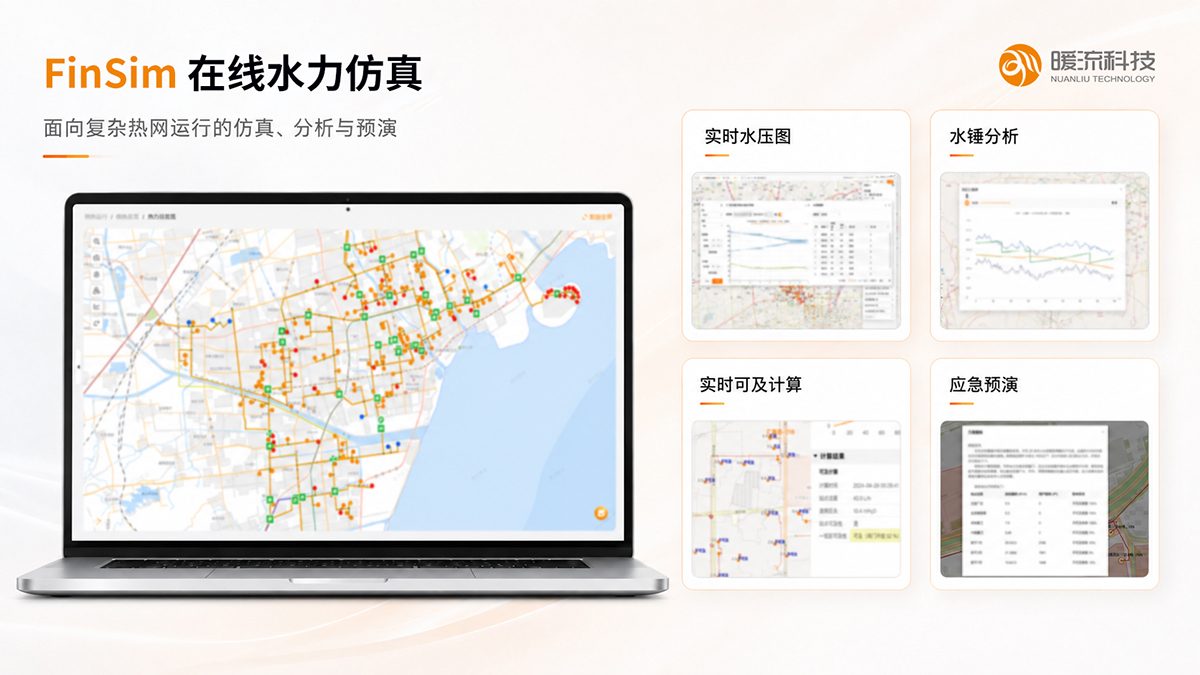
Hydraulic simulation
FinSim computes network pressure, flow and dynamic hydraulic conditions.
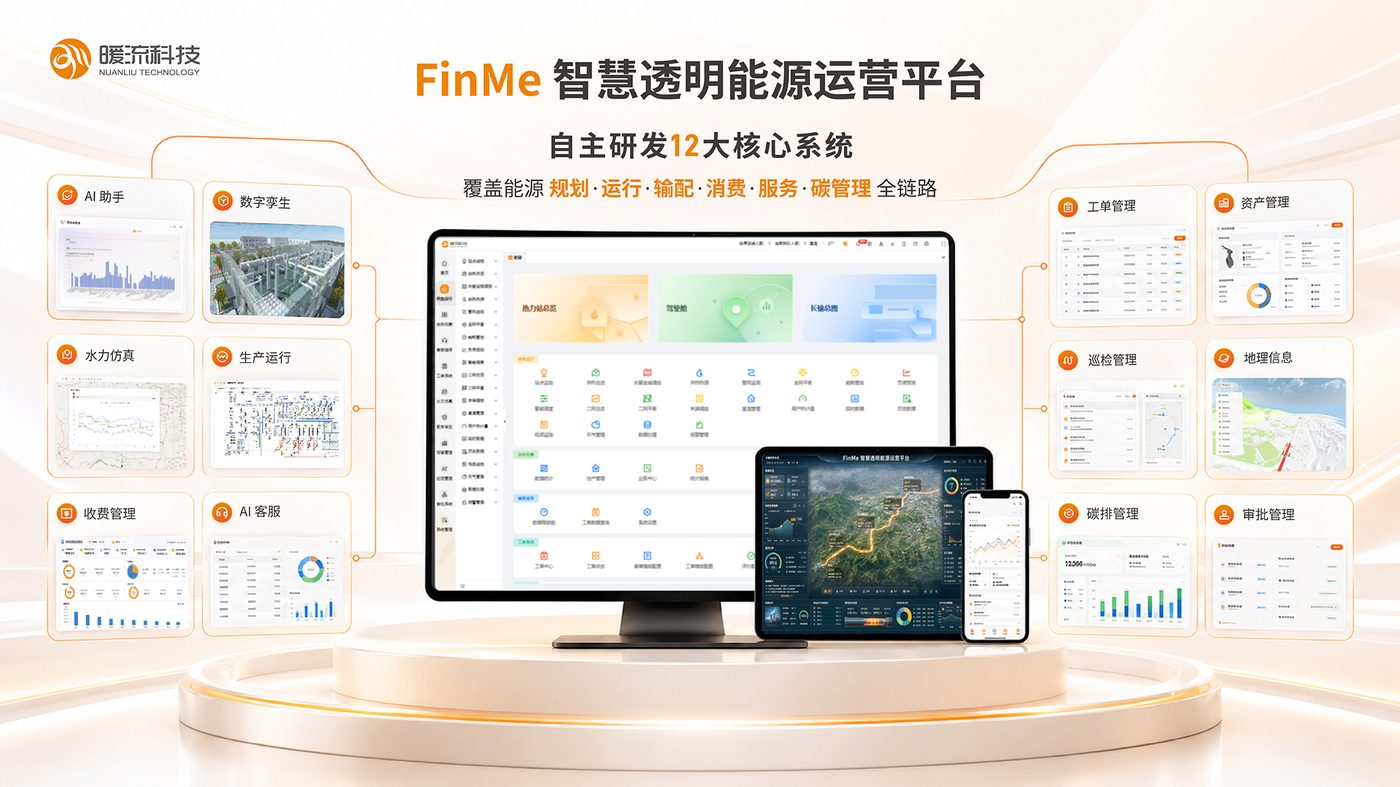
Operational AI
Forecast loads, check strategies, deploy within safety limits, and evaluate feedback — carried by the Nuanliu Energy AI Agent Platform.
Five engineering barriers between an AI and the control room
Each of these decides whether AI takes part in operation, or only reports on it afterwards.
The barrier is not any single algorithm. It is whether all five can run continuously in one real energy system — the difference between buying four tools and operating one chain.
Sensing → modelling → simulation → decision → execution → verification
The four technologies are not parallel modules. They are one chain, and each has a boundary that keeps the next link honest.
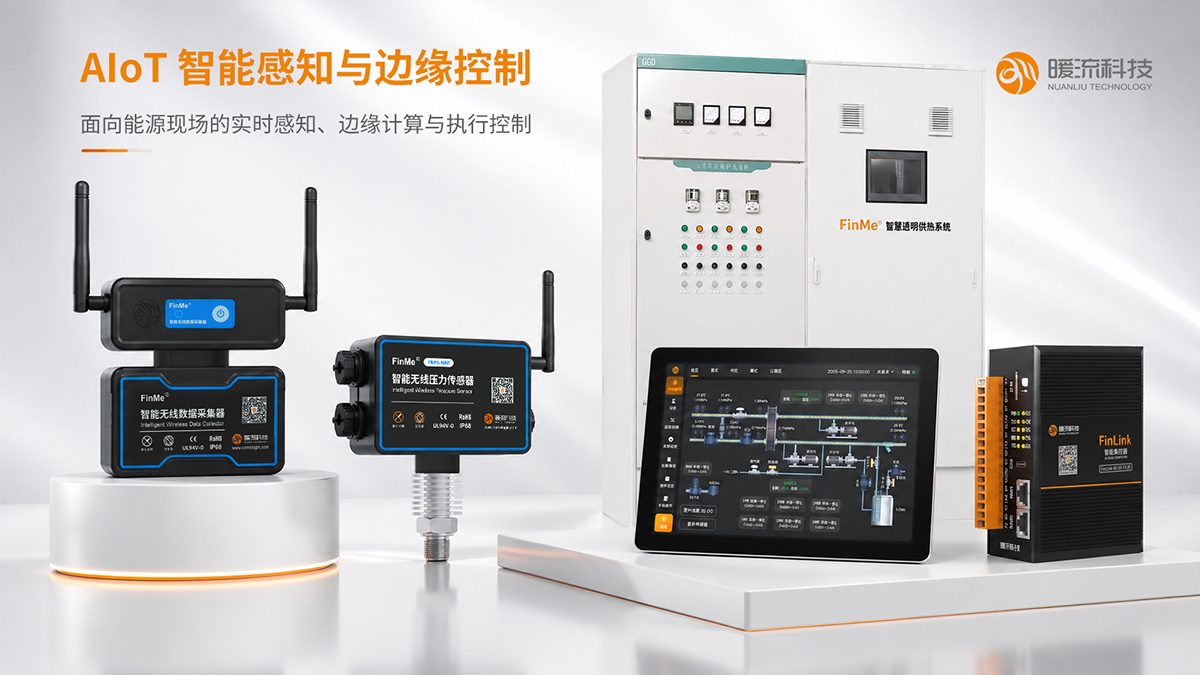
AIoT
Connects the key measurement points of source, network, station and end user. Edge caching and multi-protocol access keep collection continuous.
It supplies the state of the field — it does not decide what to do with it.
Digital twin · FinTwin
Builds network topology, equipment and spatial models, calibrated against operating data so the representation follows the field.
It provides the model the solver works on; it does not solve the network itself.
Hydraulic simulation · FinSim
Solves pressure, flow and temperature distribution online for the current condition, refreshing as conditions change rather than waiting on design-case calculation.
A strategy is validated against the solver, not against the model alone.
AI agents · FinGo
Combines load forecasts with the online solution to propose setpoints, checks pressure, temperature and equipment limits, then executes with the existing control system.
Humans set the boundaries; the agent works inside them and reports back.
Start with a real operating challenge.
Share the network, operating constraints and control objectives. We will discuss technical fit and the required evidence.