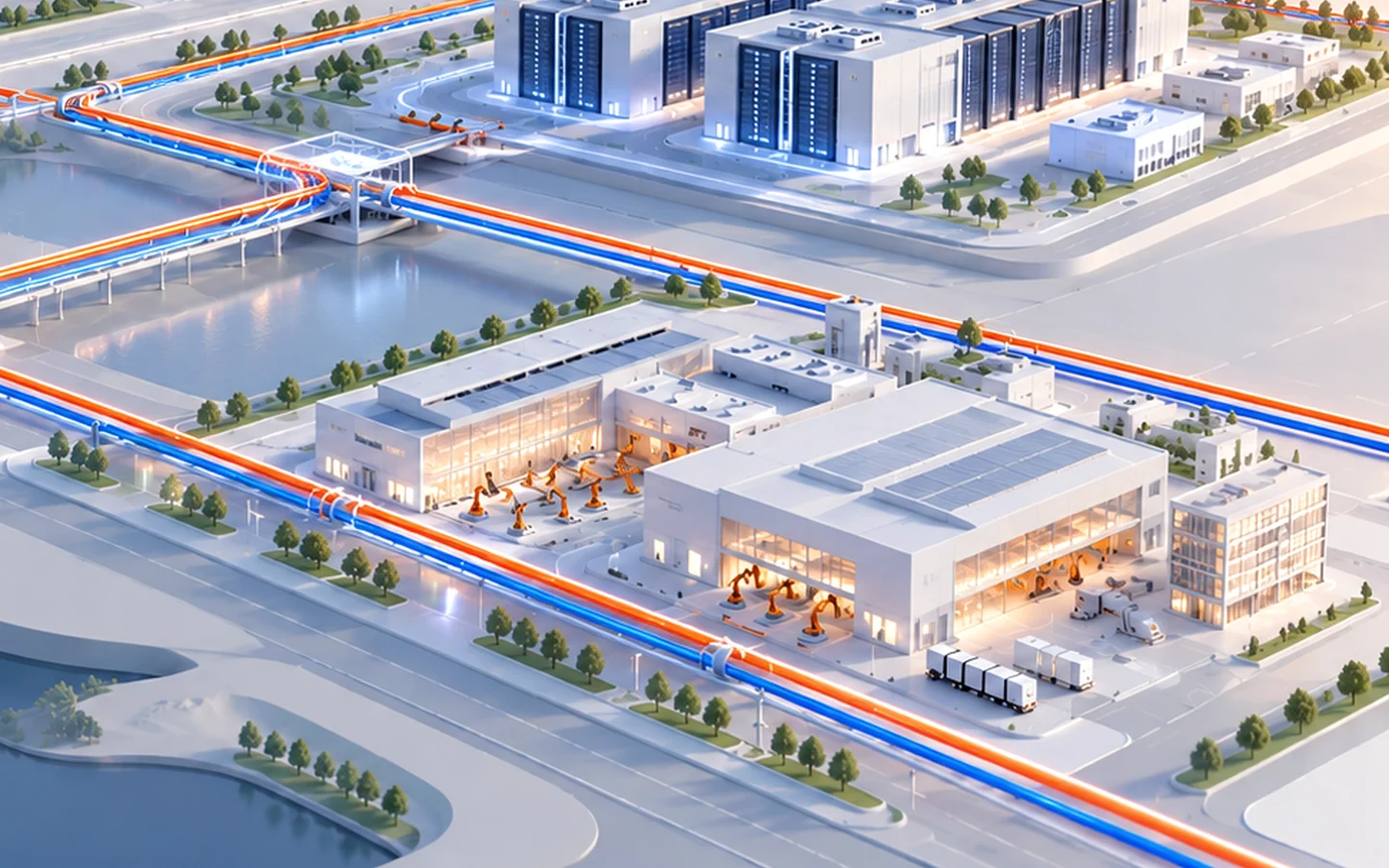
District heating
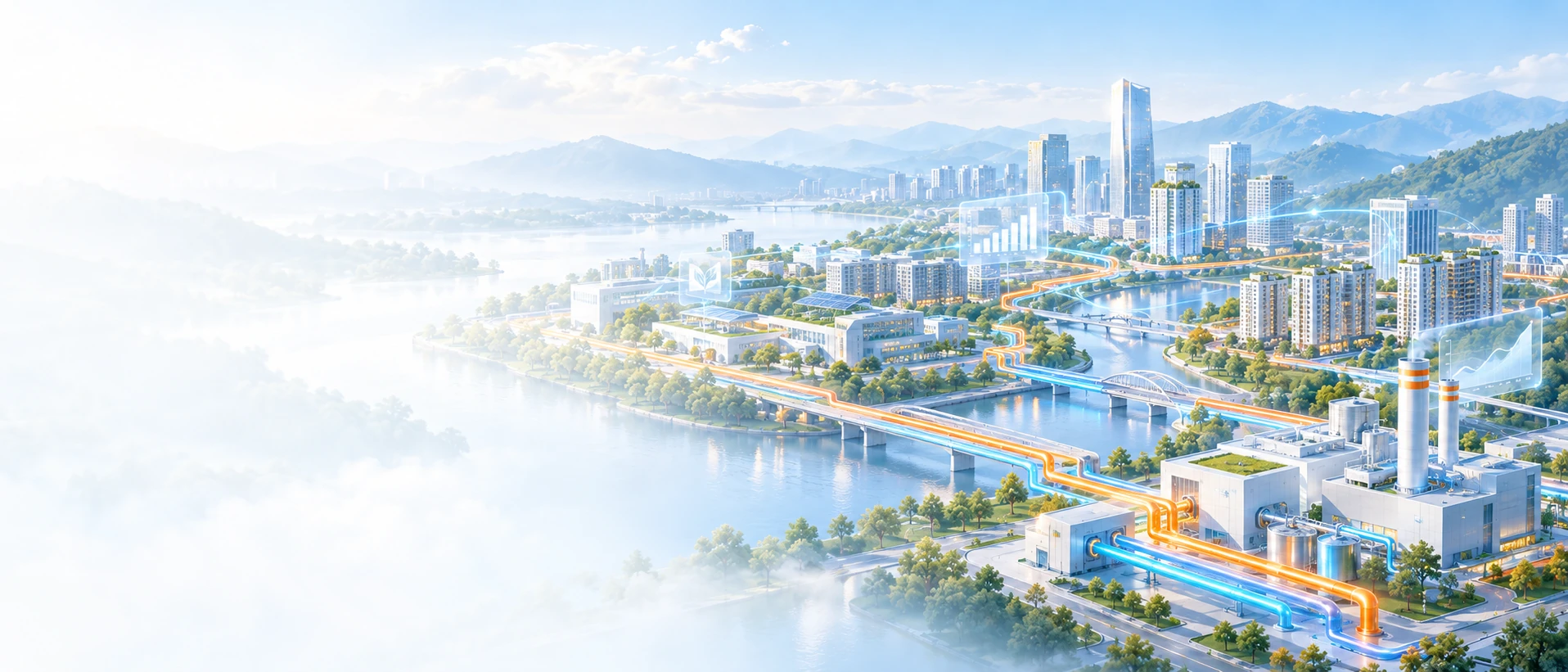
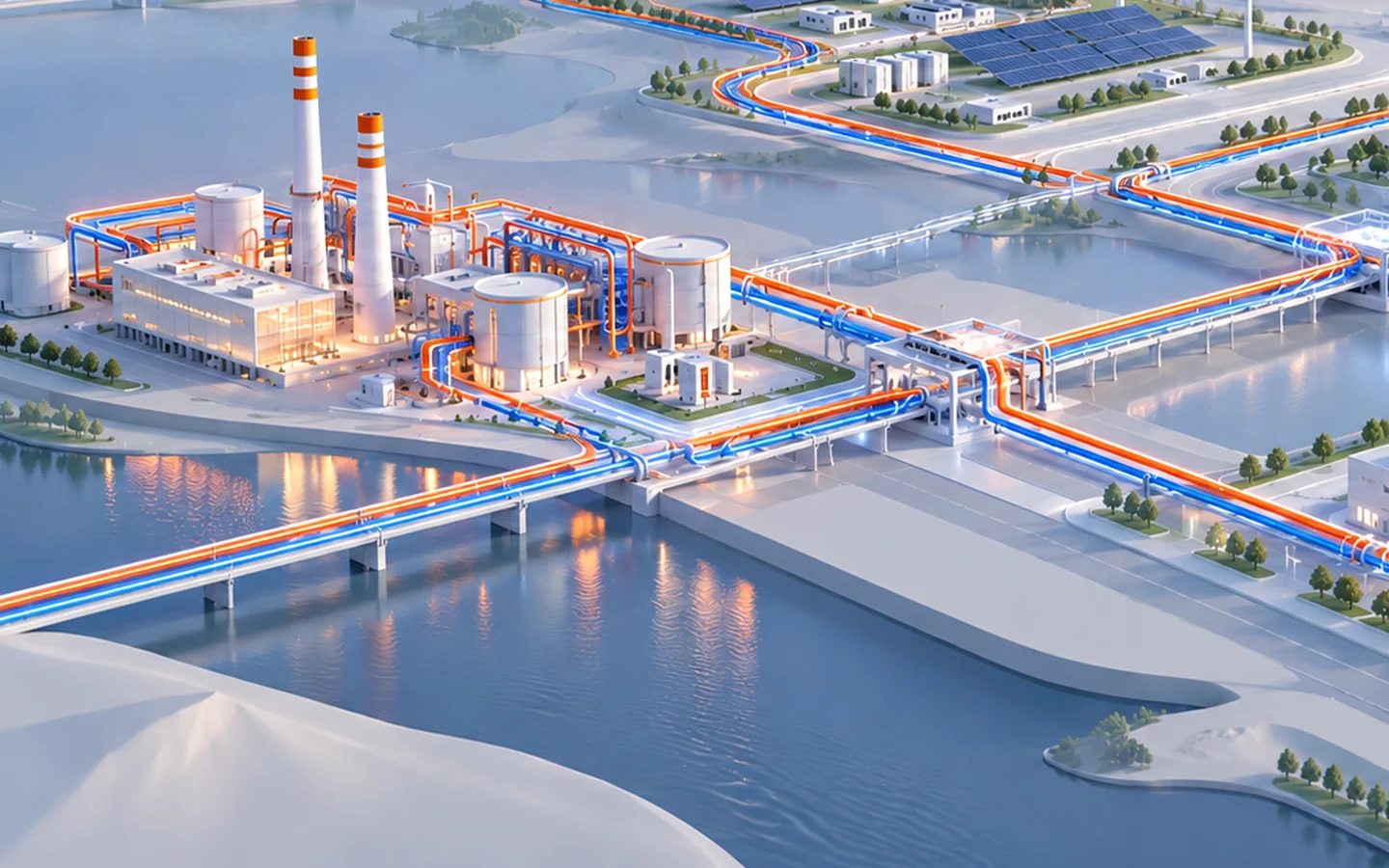
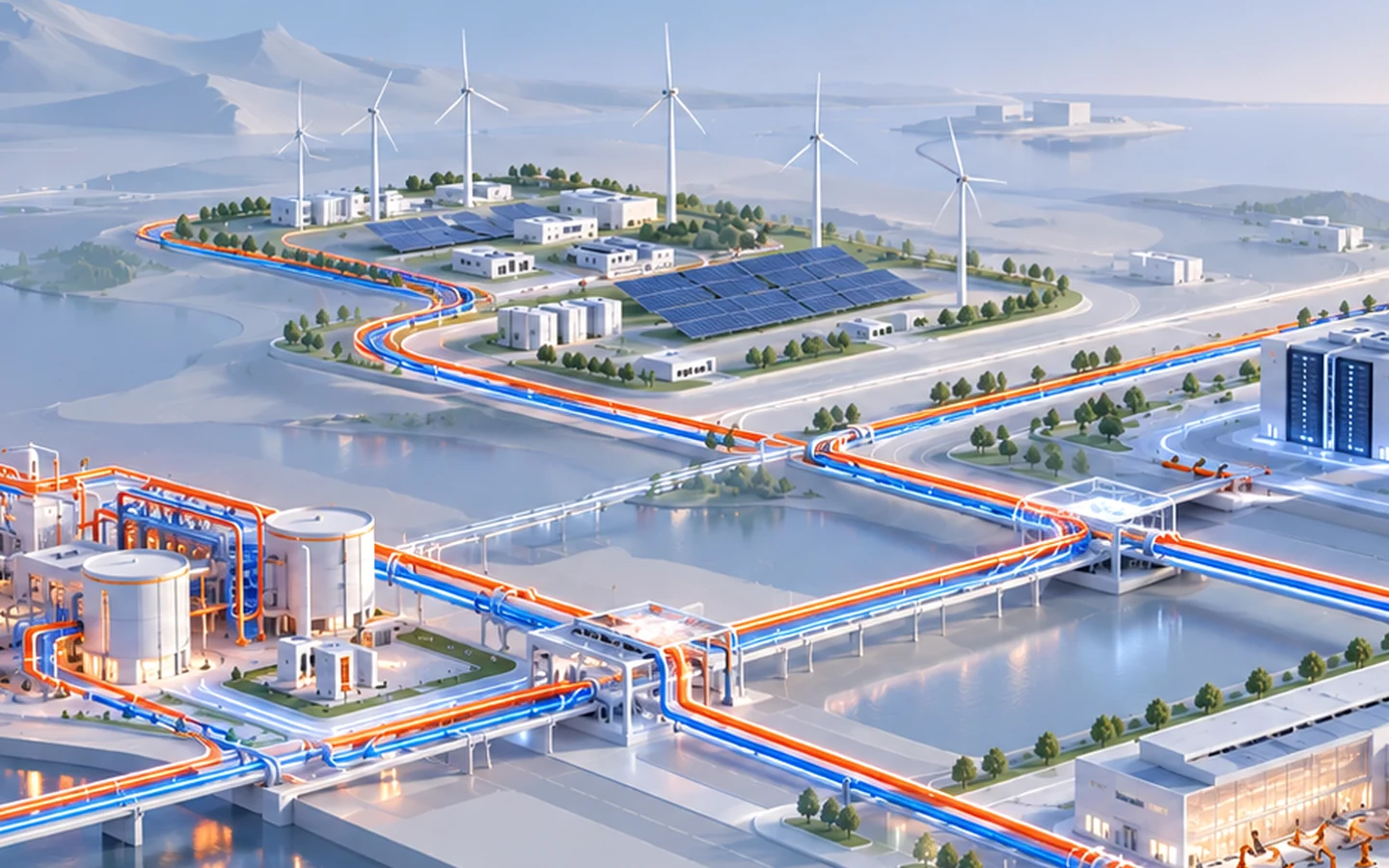
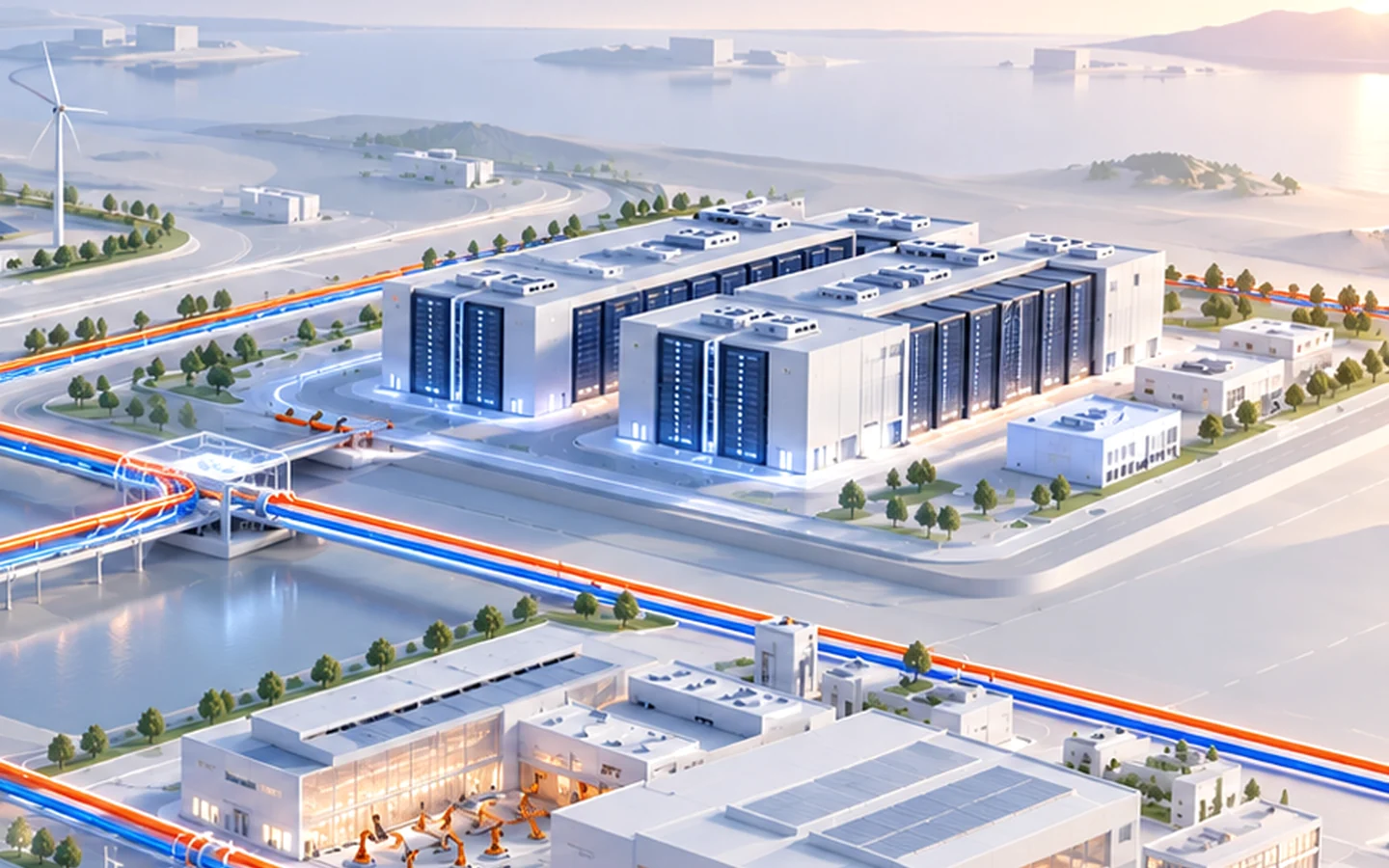
Heating problems are rarely single-point faults. Heat sources, the primary network, substations and end users affect each other, so a setpoint change in one place shows up as a pressure or temperature problem somewhere else.
We build source, network, substation and demand into one solvable model, then use it to schedule, balance and optimise under each specific operating condition rather than one fixed season-long assumption.
- Multi-source dispatch by efficiency and cost when CHP, industrial waste heat and boilers operate together
- Long-distance and high-elevation transmission: static and dynamic pressure, temperature and pumping re-evaluated after every condition change
- Substation AI group control that separates spatial water distribution from weather-driven timing, so transient return-temperature swings are not misread as hydraulic imbalance
- Fault location narrowed with online hydraulic simulation, network sensors and operating data